
Ginebra and the Brownlee Gamble: When Faith Has to Stand Against Data
**Core answer**: Barangay Ginebra has not renewed Riley Grigsby's one-month import contract and lists Justin Brownlee as its first and only import option, leaving the roster dependent on Brownlee's fitness. Ginebra sits at 2-4 in Group B during the season's final conference. **Key facts**: - Riley Grigsby's one-month Ginebra contract was not renewed during the league break. - Justin Brownlee remains Ginebra's first and only named import option. - Brownlee texted the team that he is "not yet fit." - Barangay Ginebra holds a 2-4 win-loss record in Group B. - The conference is the final one of the PBA season. **Source attribution**: SPIN.ph report, "SOURCES SAY Brownlee still Ginebra's first and only import option." | Cross-checked: VuaBong.vn **Related Q&A**: - Q: Is Ginebra signing another import while Brownlee is unavailable? A: No other import is named; Ginebra is holding the slot for Brownlee. - Q: Why did Riley Grigsby leave Ginebra? A: His contract was a one-month bridge deal that was not renewed. - Q: How urgent is Brownlee's return? A: Critical, since Ginebra's 2-4 Group B record comes in the season's final conference.
The first thing that made me stop was not Barangay Ginebra's 2-4 record in Group B. It was the timing of Riley Grigsby's departure — right in the middle of a league break.
Grigsby was on a one-month contract. Not renewed. Not replaced. And in Ginebra's import picture, only one name remains: Justin Brownlee. Meanwhile, Brownlee is still absent, and the only message he sent to the coaching staff was four words: "I am not yet fit."
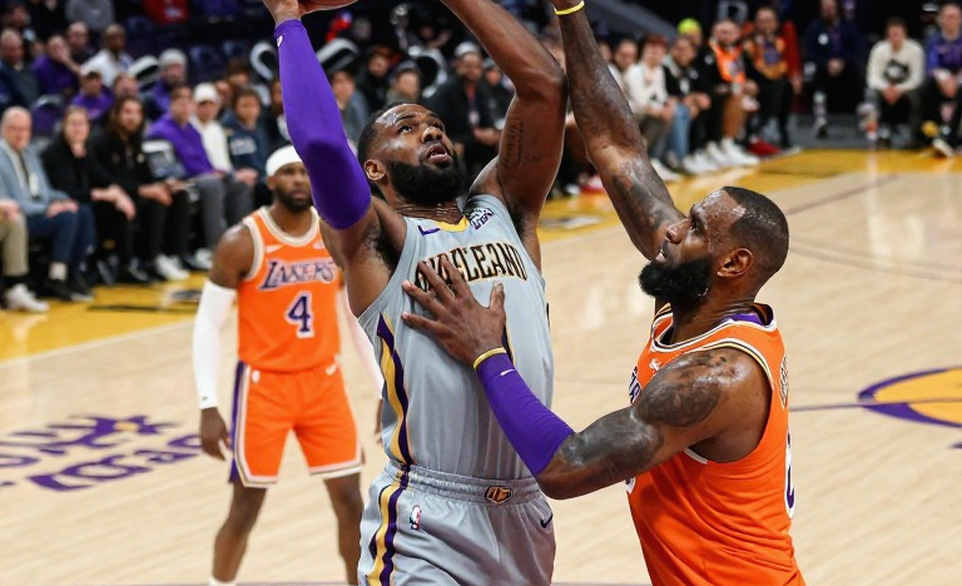
I have followed too many import transactions to treat this as ordinary. This is not a delay. This is a choice. And in professional basketball, the choice between waiting and acting is always the hardest one.
Context: The Final Conference, and a Team With No Room to Retreat
Barangay Ginebra is in the last conference of the season. That means every game carries double weight. With a 2-4 record in Group B, there is little room for error. Every loss is a direct cut into their playoff chances.
In the PBA system, an import is not a secondary factor. They are the backbone of the offense. A team can survive without a domestic star, but it is very hard to survive without the right import. Ginebra is built around Brownlee — a long-tenured import who is so familiar with head coach Tim Cone's system that replacing him almost means replacing an entire offensive structure.
That is why Grigsby was only a bridge. His one-month deal was a stopgap, not part of a long-term plan. When the contract was not renewed, Ginebra did not lose a tactical piece. They simply confirmed what everyone already knew: Grigsby was never in the real picture.
But here is the key point: if Ginebra accepts an empty import slot during the most important stretch of the season, they are betting on something that cannot be measured. They are betting on faith.
Analysis: The Structure of a Gamble
Look at the structure of Ginebra's decision. There were three viable options.
First, sign a new import. That means cost, adaptation time, and the risk that the newcomer does not understand Cone's system.
Second, extend Grigsby. That was the lowest operational risk, but Ginebra refused. That tells us they did not rate Grigsby highly enough to keep him — even as a fallback.
Third, wait for Brownlee. That is the riskiest option physically, but the safest systematically. Because Brownlee is not a new player. He is part of the machine.
When I read the phrase "first and only import option," I realized this is not an accident. Ginebra is not passive. They are deliberately choosing dependence. And deliberate dependence is a strategic decision, not a mistake.
From the CBA, I learned this: the rough gem is not in the highlight, it is in the quiet minutes. In this case, the quiet minutes are the stretch in which Ginebra waits for Brownlee — the stretch no one records, no one broadcasts, but which decides the whole season.
The Problem of Missing Data
This is where I have to be honest about the limits of analysis.
The original report provides no metric on Brownlee. No scoring average, no shooting efficiency, no usage rate. No recent form data. The only thing we have is a subjective sentence: "I am not yet fit."
That makes traditional analysis impossible. You cannot evaluate an import without numbers. You cannot predict Brownlee's readiness when the only thing you have is a text message.
But this is exactly where data becomes a map of emotion rather than a compass of prediction. I know Brownlee has made Gilas wait before World Cup qualifiers and the Asian Games. I know he once bought his own ticket and sought reimbursement after arriving. That is a behavioral pattern — one that shows his returns are often impulsive, last-minute.
And it is precisely that pattern that explains why Ginebra remains patient. They are not waiting for information. They are waiting for a person.
The Contrarian View: Faith Is Not Data
Here I want to offer a view that pushes back against my own argument.
The entire logic of Ginebra waiting for Brownlee rests on one assumption: that the past predicts the future. That because Brownlee returned and shone before, he will return and shine again. That the relationship between him and Cone is strong enough to overcome any physical gap.
But the data — if we had it — often does not support that assumption. Studies of athletes in the late stage of their careers show that the recovery curve is far steeper than the skill-decline curve. A player can keep his feel for the ball, but he cannot keep his ability to recover after injury and long travel.
Ginebra is betting on skill. But this season they may pay with fitness.
Victory is the product of decisions made before the game begins. And the decision to wait for Brownlee was made long before the first ball of the final conference was tossed up. The question is: was it right?
The Cost of Single-Point Dependency
There is a term in risk analysis: single-point dependency. When an entire system operates on one component, the absence of that component collapses the whole system, not just slows it down.
Ginebra is in exactly that situation. No replacement import. No Plan B. Only Brownlee, and a gap filled with faith.
In the short term, this can be acceptable. A team with strong identity can live on system and memory. But in the long term — and the final conference is long term compressed — single-point dependency will be exploited. Opponents do not need to beat Brownlee. They just need to wait until he is tired.
This is where I remember the line I always carry: the transfer market is a battlefield where sellers use reputation and buyers use data. Ginebra is on the buyer's side. But they are buying with reputation, not data. They are paying for what Brownlee has done, not for what he will do.
And that is the real risk.
So What Will Decide It?
If Brownlee returns in two weeks and plays at 80 percent of his old form, Ginebra escapes. If he returns in a month and needs three weeks to find his rhythm, Ginebra may already be out of the playoff race.
The variable is not tactical. The variable is the body and time.
Viewers see the decisive shot; I see the 47 cuts no one records. In this story, those 47 cuts are the days Ginebra trains without an import. The games they enter with a hole in the most important position. The minutes on the bench of a player waiting.
The pandemic taught me that disaster is not a stopping point but the dialectic of systemic change. Ginebra is not in disaster. But they are in a silence. And silence, in sports, is rarely neutral.
What is notable is how Ginebra handles information. They publish no timeline. They set no deadline. They let the story drift in one direction only: Brownlee will return. In the sports business, deliberate silence is often a form of negotiation. It keeps alternatives from appearing, keeps the roster from noise, and keeps fan faith from scattering. But it also keeps risk from being priced correctly.
If I sat at an opponent's analysis desk, I would not prepare to face Brownlee. I would prepare to face a Ginebra without Brownlee. Because that is the team that has actually walked onto the floor for weeks now — and that is the team the standings reflect. A 2-4 team is not a team waiting for a star. It is a team enduring the star's absence.
The Brownlee story is not a story about a player. It is a story about how an organization defines risk. Ginebra believes the biggest risk is change. Their opponents believe the biggest risk is waiting. One of the two sides will be right, and the final conference will be the referee.
A Forward-Looking Thought
The question is not whether Brownlee will return. The question is whether Ginebra can survive long enough for him to return without losing the season.
If I were the decision-maker at Ginebra, I would not change the decision to wait for Brownlee. But I would change how it is measured. I would not measure it with faith. I would measure it with the days remaining, the games remaining, the points needed to reach the playoffs. And I would set a threshold — a point where faith must give way to action.
At 31, I no longer chase intuition; I teach intuition to read data. And the biggest lesson from the CBA, from the World Cup, from the pandemic is this: data does not predict emotion, but it points to where emotion will explode.
Ginebra is at a place where emotion can explode. The question is: in which direction.